

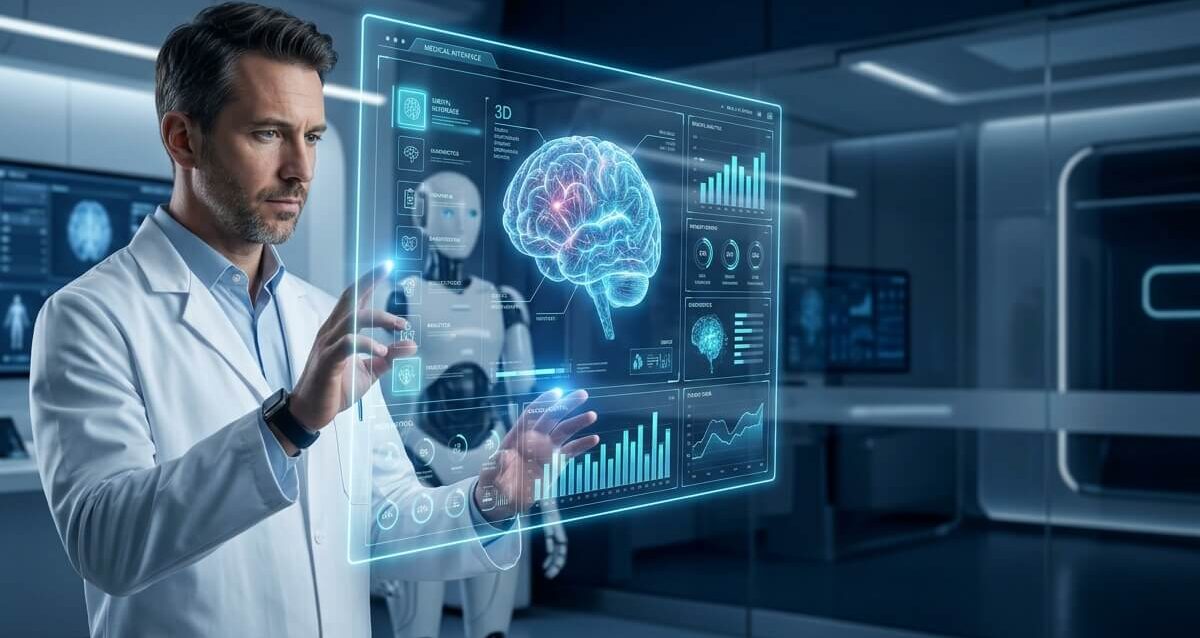
Artificial Intelligence is no longer a futuristic concept in healthcare. It has become a powerful technology that is actively reshaping hospitals, clinics, medical research, diagnostics, and patient experiences worldwide. From AI-powered diagnostics to intelligent patient monitoring systems, medical AI is helping healthcare providers deliver faster, smarter, and more accurate treatment than ever before.
As healthcare systems continue to face rising patient demands, workforce shortages, and operational challenges, AI-driven healthcare solutions are becoming essential for improving efficiency and saving lives.
What is Medical AI?
Medical AI refers to the use of artificial intelligence technologies in healthcare environments to analyze medical data, automate tasks, support decision-making, and improve patient outcomes. These systems use machine learning, deep learning, predictive analytics, and natural language processing to process large volumes of healthcare information with remarkable accuracy.
AI in healthcare can assist with:
- Disease diagnosis
- Medical imaging analysis
- Drug discovery
- Patient monitoring
- Treatment recommendations
- Administrative automation
- Personalized healthcare plans
The integration of AI into healthcare is creating a more connected and data-driven medical ecosystem.
AI-Powered Diagnostics Are Improving Accuracy
One of the biggest breakthroughs in medical AI is diagnostic intelligence. Traditional diagnosis methods often depend heavily on manual analysis and physician experience. AI systems can now analyze medical scans, laboratory reports, and patient history within seconds.
Advanced AI diagnostic systems are already being used for:
- Cancer detection
- Cardiovascular risk analysis
- Brain imaging interpretation
- Skin disease recognition
- Early-stage disease prediction
Medical AI algorithms can identify patterns that may be difficult for humans to detect, helping doctors make more informed decisions while reducing diagnostic errors.
For example, AI imaging tools are now capable of detecting abnormalities in X-rays, MRIs, and CT scans with extremely high precision. This allows healthcare professionals to begin treatment earlier and improve patient survival rates.
Personalized Patient Care Through AI
Modern patients expect personalized healthcare experiences. AI technology enables healthcare providers to create customized treatment plans based on individual medical history, lifestyle, genetics, and health patterns.
AI-driven healthcare systems can monitor patient conditions in real time and provide predictive insights before symptoms become severe. Wearable medical devices connected with AI platforms can track:
- Heart rate
- Blood pressure
- Oxygen levels
- Sleep quality
- Glucose levels
This real-time data allows doctors to intervene early and improve long-term patient outcomes.
Personalized healthcare powered by AI is particularly beneficial for patients with chronic diseases such as diabetes, heart disease, and hypertension.
Healthcare Automation is Reducing Administrative Burden
Administrative inefficiencies are one of the largest operational challenges in healthcare. Hospitals and clinics spend enormous amounts of time handling paperwork, appointment scheduling, billing, insurance processing, and patient records management.
AI automation helps streamline these repetitive processes and allows healthcare staff to focus more on patient care.
Common healthcare automation applications include:
- Automated appointment scheduling
- AI-powered chat support
- Electronic health record management
- Medical transcription
- Insurance claim processing
- Workflow optimization
Healthcare organizations that implement AI automation can significantly reduce operational costs while improving service quality and patient satisfaction.
AI in Drug Discovery and Medical Research
Drug development is traditionally expensive and time-consuming. Artificial intelligence is accelerating medical research by analyzing massive datasets and identifying potential treatment compounds much faster than traditional methods.
AI-powered research systems can:
- Predict drug effectiveness
- Analyze molecular structures
- Identify disease patterns
- Accelerate clinical trials
- Improve pharmaceutical research efficiency
During global health emergencies, AI has played a critical role in helping researchers develop treatments and vaccines more efficiently.
As AI continues to evolve, pharmaceutical companies are increasingly investing in machine learning technologies to improve innovation and reduce development timelines.
Predictive Analytics is Preventing Serious Health Risks
Predictive analytics is another major advantage of AI in healthcare. By analyzing patient history, genetic information, and behavioral data, AI systems can predict potential medical risks before they become life-threatening.
Predictive healthcare applications include:
- Early disease detection
- Hospital readmission prevention
- Sepsis prediction
- Cardiac event forecasting
- Mental health monitoring
Hospitals can use predictive AI models to allocate resources more effectively and improve emergency response planning.
This proactive healthcare approach shifts the focus from treatment to prevention, which can reduce healthcare costs and improve public health outcomes.
Challenges and Ethical Considerations
Despite its benefits, medical AI also presents important ethical and regulatory challenges.
Healthcare organizations must address concerns related to:
- Patient data privacy
- AI bias
- Regulatory compliance
- Data security
- Human oversight
- Ethical decision-making
AI systems should support healthcare professionals rather than replace them entirely. Human expertise remains essential in critical medical decisions and patient communication.
Transparency, compliance, and responsible AI development are crucial for maintaining trust in healthcare technologies.
The Future of AI in Healthcare
The future of medical AI looks extremely promising. As machine learning models become more advanced, healthcare systems will continue to improve in speed, efficiency, and accuracy.
Future innovations may include:
- Fully AI-assisted hospitals
- Robotic surgery advancements
- AI mental health assistants
- Predictive genomic medicine
- Intelligent virtual healthcare platforms
Healthcare providers that embrace AI technologies today will be better prepared to meet future patient expectations and industry demands.
Conclusion
Artificial intelligence is transforming healthcare at every level. From intelligent diagnostics and predictive analytics to personalized treatment and automation, medical AI is helping healthcare providers improve patient outcomes while increasing operational efficiency.
As healthcare technology continues to evolve, AI-powered medical solutions will become an essential part of modern patient care. Organizations that invest in healthcare AI today are positioning themselves for long-term innovation and competitive growth in the digital healthcare era.