

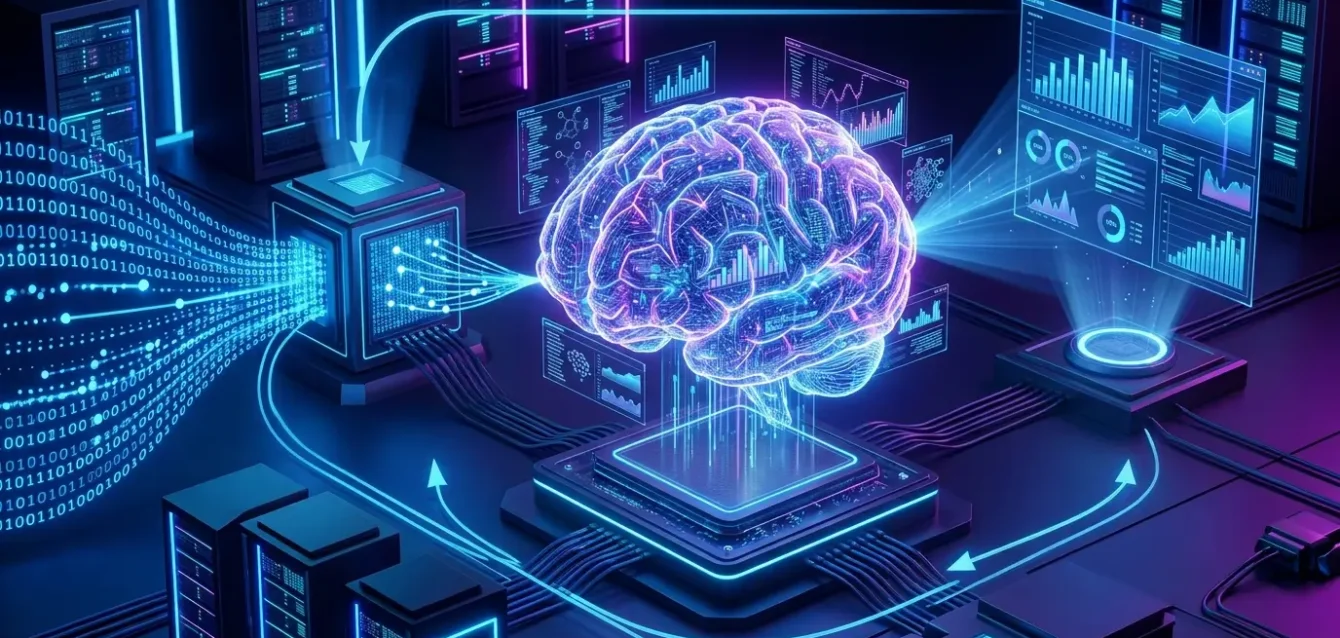
Technology is becoming smarter every day. From personalized recommendations on streaming platforms to voice assistants and self-driving technology, machine learning is behind many digital experiences we use today.
But have you ever wondered how machine learning actually works?
Some people imagine machine learning as something mysterious happening inside computers. Maybe your laptop secretly grows tiny robotic legs at night, walks to a public library, reads thousands of encyclopedia books, and comes back smarter before morning.
And if your laptop feels warm when you wake up? Maybe it was running back home after a long night of studying!
Of course, this is only a fun imagination. Computers are not secretly visiting libraries. The real science behind machine learning is even more interesting.
Machine learning works through data, algorithms, patterns, and continuous improvement.
What Is Machine Learning?
Machine Learning (ML) is a branch of Artificial Intelligence (AI) that allows computer systems to learn from data and improve their performance without being manually programmed for every single task.
Traditional software follows fixed instructions created by programmers.
Machine learning systems are different.
Instead of giving the computer every possible rule, developers provide data. The machine learning model studies this information, finds patterns, and uses those patterns to make predictions or decisions.
Simply explained:
Machine learning teaches computers how to learn from experience.
How Does Machine Learning Work?
Machine learning may sound complicated, but the basic process can be understood through a few important steps.
1. Collecting Data
Everything starts with data.
Machine learning systems need information to learn from. This data can include:
- Images
- Text
- Numbers
- Videos
- User behavior
- Historical records
The quality and quantity of data directly affect how well a machine learning system performs.
Better data usually creates better results.
2. Training the Machine Learning Model
After collecting data, the next step is training.
During training, a machine learning algorithm studies the information and searches for patterns.
For example, if a system is learning to recognize cats, it analyzes thousands or millions of cat images.
Over time, it learns common features and improves its ability to identify new images.
3. Finding Patterns
Pattern recognition is one of the most important parts of machine learning.
Machine learning models identify relationships inside data that humans may not easily notice.
These patterns help systems make predictions.
Examples:
- Predicting weather changes
- Detecting unusual transactions
- Suggesting products
- Understanding human language
4. Testing and Improving
After training, the machine learning model is tested with new information.
If the results are incorrect, developers improve the model by adjusting the system or providing better data.
This process helps machine learning become more accurate over time.
Types of Machine Learning
There are several types of machine learning. Each type solves different problems.
Supervised Learning
Supervised learning uses labeled data.
This means the system learns from examples where the correct answers are already provided.
Examples:
- Email spam detection
- Image classification
- Price prediction
Unsupervised Learning
Unsupervised learning works with data that does not have predefined answers.
The system finds hidden patterns by itself.
Examples:
- Customer grouping
- Market analysis
- Data organization
Reinforcement Learning
Reinforcement learning is based on rewards and feedback.
The system learns by trying actions and improving based on results.
Examples:
- Robotics
- Game AI
- Autonomous systems
Real-World Examples of Machine Learning
Machine learning is already part of everyday life.
Recommendation Systems
Streaming services and online platforms use machine learning to suggest movies, videos, music, and products based on user preferences.
Voice Assistants
Digital assistants use machine learning to understand speech and provide useful responses.
Healthcare Technology
Machine learning helps analyze medical information, support research, and improve healthcare tools.
Fraud Detection
Banks and financial companies use machine learning systems to identify unusual activities and improve security.
Self-Driving Technology
Autonomous vehicles use machine learning to understand surroundings and make driving decisions.
Benefits of Machine Learning
Machine learning provides many advantages in modern technology.
Faster Decision Making
ML systems can analyze huge amounts of information quickly and provide useful insights.
Automation
Machine learning reduces repetitive manual work by automating complex processes.
Better Personalization
Businesses use machine learning to create personalized experiences for customers.
Continuous Improvement
Machine learning systems can improve as they process more useful data.
Challenges of Machine Learning
Machine learning is powerful, but it also has challenges.
Poor-quality data can create inaccurate results.
Machine learning models also require careful development, testing, and monitoring.
Privacy, security, and responsible AI development are important parts of building reliable ML systems.
Future of Machine Learning
The future of machine learning is growing rapidly.
As technology advances, ML will continue improving industries such as:
- Artificial Intelligence
- Healthcare
- Education
- Cybersecurity
- Software development
- Business automation
Machine learning will help create smarter tools and improve how humans interact with technology.
Final Thoughts
Machine learning is not about computers secretly running to libraries at night. It is about teaching machines to recognize patterns, learn from data, and make intelligent decisions.
From simple recommendations to advanced AI systems, machine learning is becoming one of the most important technologies shaping our future.
Understanding how machine learning works helps us better understand the digital world around us and the innovations still to come.