

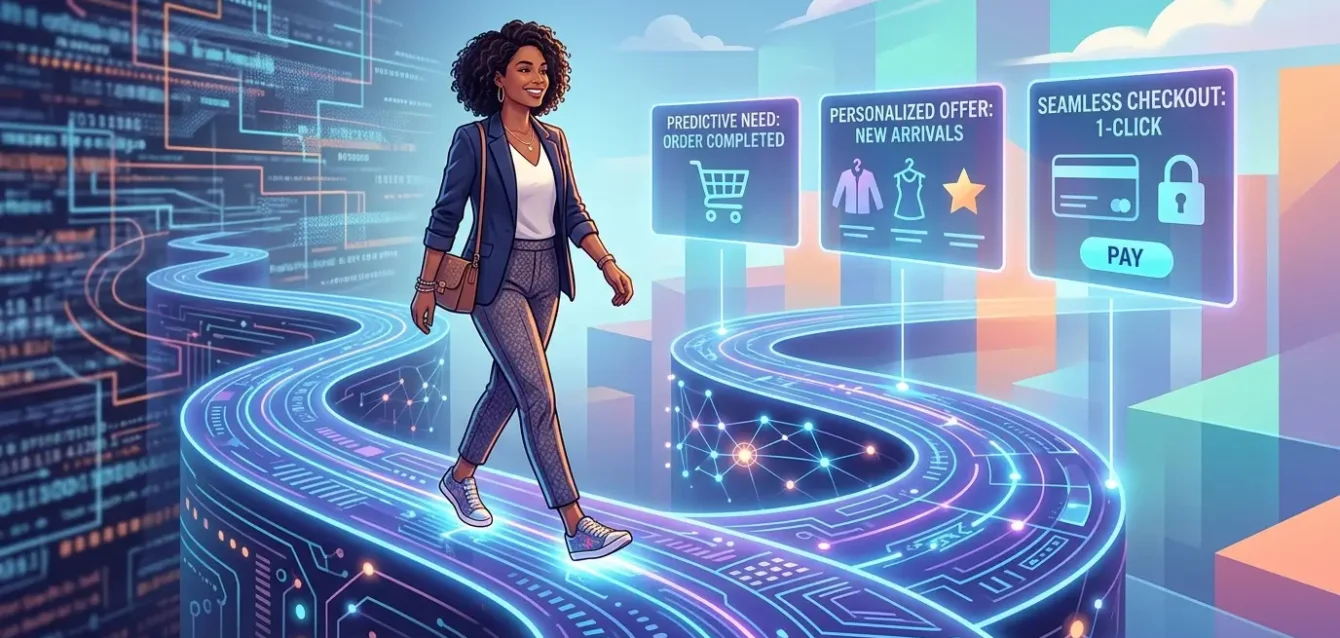
In today’s hyper-competitive business landscape, the product or service you sell is only half the equation. The other half is how you make your customers feel. As consumer expectations skyrocket, businesses are increasingly turning to artificial intelligence to bridge the gap between what buyers want and what support teams can realistically deliver.
AI customer experience strategy is no longer just about cutting costs; it’s about turning every touchpoint into a seamless, highly relevant interaction. Here is a closer look at how AI is actively reshaping the way modern brands engage with their audiences.
Why Customer Experience Matters
Customer experience (CX) is the lifeblood of sustainable growth. Research from 2026 indicates that customer frustration is rising faster than expectations, and loyalty is becoming increasingly fragile. When customers encounter friction—whether it is a long wait time, a repetitive menu maze, or irrelevant product recommendations—they don’t hesitate to switch to a competitor.
Conversely, getting it right pays dividends. Businesses that view CX as a core revenue driver consistently see higher retention rates, improved Customer Satisfaction (CSAT) scores, and an undeniable boost to their bottom line. In short, experience is the new battleground for brand loyalty, and AI is the ultimate advantage.
AI-Powered Personalization
Personalization is no longer just adding a customer’s first name to an email. In 2026, memory-rich AI enables true personalization at scale. By analyzing browsing patterns, past purchases, and real-time behavioral signals, AI systems can instantly tailor the customer journey to individual preferences.
-
Contextual continuity: Modern AI systems remember prior interactions across different channels, meaning a customer never has to repeat their problem when switching from chat to a live agent.
-
Targeted recommendations: AI-driven experiences can significantly increase customer lifetime value by aligning offers with a user’s immediate needs and interests. For instance, personalized emails powered by behavioral data deliver significantly higher transaction rates than generic broadcasts.
When consumers feel understood, they spend more over time and churn less frequently.
Smart Chatbots and Virtual Assistants
The era of clunky, rigid bots that leave users shouting “speak to a human!” is fading. Today’s smart chatbots and virtual assistants are powered by advanced Natural Language Processing (NLP) and Generative AI, allowing them to converse dynamically, detect sentiment, and resolve complex issues.
-
Instant, 24/7 resolution: AI bots can handle routine tasks such as tracking deliveries, processing returns, and answering FAQs in seconds, thereby completely eliminating wait times.
-
Empowering human agents: By automating repetitive inquiries, AI acts as a filter. This frees up human support specialists to focus on high-stakes, emotionally complex issues where empathy and nuanced problem-solving are indispensable.
Predictive Customer Analytics
Rather than just reacting to problems as they occur, AI allows businesses to anticipate what a customer will need before they even ask. Predictive customer analytics processes massive datasets to uncover hidden trends, spot emerging issues, and gauge customer health scores.
By keeping a pulse on engagement metrics, AI can identify customers who are at a high risk of churning. This allows your support and success teams to intervene proactively—whether through a targeted discount, a check-in email, or customized troubleshooting—saving the relationship before it breaks.
Future of Customer Engagement
The trajectory of AI customer experience points toward even deeper integration and seamless multimodal support. We are moving toward a landscape where AI can interpret visual, voice, and text inputs simultaneously—allowing a customer to upload a photo of a broken product while explaining the issue via voice note, all in a single thread.
As these tools become more sophisticated, the most successful brands will be those that strike the perfect balance between automation and the human touch. AI will handle the speed, memory, and scale, while human agents will continue to provide the empathy, connection, and judgment that technology simply cannot replicate.